Making Progress Visible

How Great Plains Mental Health Partners Uses Follow-Up Testing to Guide Care
September, 2026
Great Plains Mental Health Partners serves patients ages 5 to 100 in a rural community where access to mental health care is limited. For Bryan Eckhard, MSN, FNP-C, PMHNP-BC, CEO and a primary provider at the practice, measuring progress over time is an important part of making sure treatment is working.
Before MindMetrix, the practice relied on tools like the PHQ-9, GAD-7, and other individual assessments. In a telehealth setting, getting patients to consistently complete multiple screeners could be difficult.
MindMetrix gave the team a way to assess patients more comprehensively at baseline and then measure change over time.
“Now we can screen for everything all at once and re-test every six months. The patients can see the changes and progress. They really like seeing that themselves.”
Building Follow-Up Into the Workflow
MindMetrix is now part of Great Plains’ standard workflow:
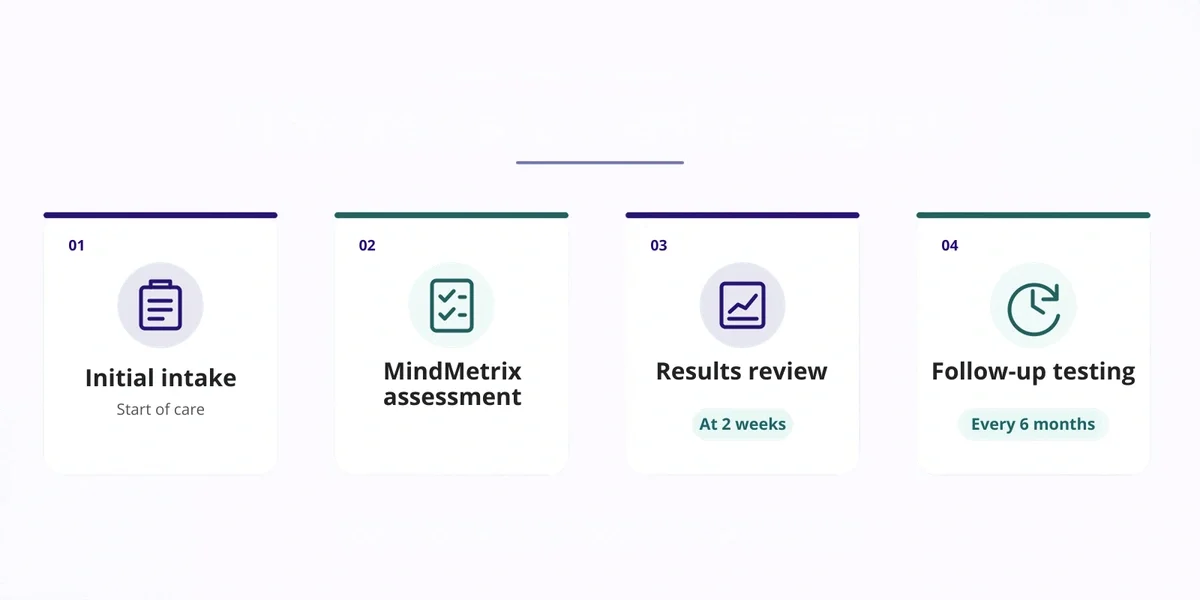
The repeated assessments give the team an objective way to see what is improving, identify areas that may still need attention, and adjust treatment accordingly.
“It is all part of our flow now,” Eckhard says.
Follow-up testing can also surface concerns that patients may not bring up during an interview.
“It brings up things that patients do not think about during the interview. Some of the things they do not want to think about, they are willing to discuss after.”
Measuring Meaningful Change
Across patients who have completed follow-up testing, Great Plains has seen:
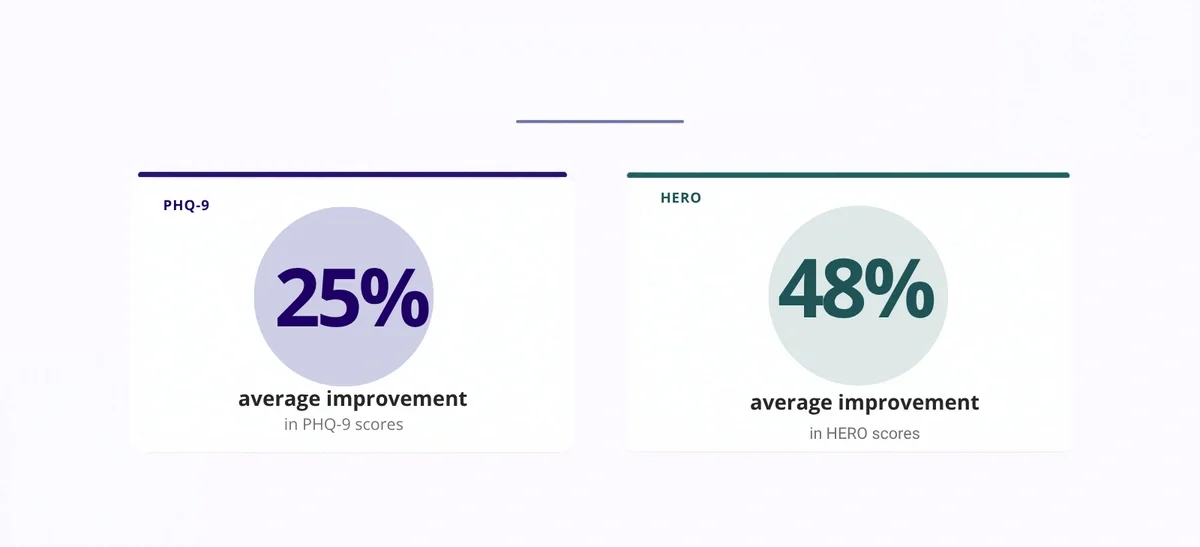
For Eckhard, the numbers reinforce what the team is seeing in practice.
“It has given our team confirmation that we are treating correctly and that patients are in fact meeting their goals. It has boosted our confidence as a team that we are doing right by the patient.”
The results also make progress easier for patients to see and understand.
“Having the follow-up results provides the patient with a percentage increase or decrease in symptoms and helps them understand the amount of progress they have made.”
From Results to Real-World Decisions
Follow-up data has helped Great Plains make meaningful decisions throughout the course of care.
For one patient receiving Spravato, follow-up testing helped the team clearly see improvement over time. As the patient progressed, their treatment was reduced to Spravato once every three weeks, while their other medications decreased from five prescriptions to one medication for generalized anxiety disorder.
In another case, MindMetrix provided supporting documentation for a patient seeking to return to active military duty. The patient had previously served in combat before transitioning to the reserves and needed to be evaluated before returning to active duty.
The MindMetrix assessment showed no current symptom elevations alongside a strong HERO wellness score. Combined with Eckhard’s clinical evaluation, the results helped document the patient’s current status, and the patient was successfully cleared to return to active duty.
Great Plains has also used MindMetrix results as supporting documentation for treatment authorization requests that were initially denied.
A Clearer View of Progress
For Great Plains, follow-up testing has become more than a way to track scores. It gives clinicians and patients a shared view of progress and provides objective information the team can use to guide long-term care.
“The improvements have been easier to measure over time with MindMetrix doing the comparisons and keeping track for us. It has assisted us in guiding our treatment and alterations in the treatment plan over the continuum of patient care.”
-Bryan Eckhard, MSN, FNP-C, PMHNP-BC
CEO of Great Plains Mental Health Partners Inc
Ready to boost your practice?
Try 3 complimentary assessments on us.