How to Read a MindMetrix Report

From symptom patterns to clinical direction
May, 2026
Once a patient completes a MindMetrix assessment, the report becomes a structured starting point for deeper clinical understanding.
Most mental health tools either give you a single screener score with little context or overwhelm you with pages of disconnected data. MindMetrix was built differently.
The report is designed to help clinicians move from broad symptom presentation to a more structured clinical understanding without adding unnecessary cognitive load during intake.
Start with Clinical Orientation
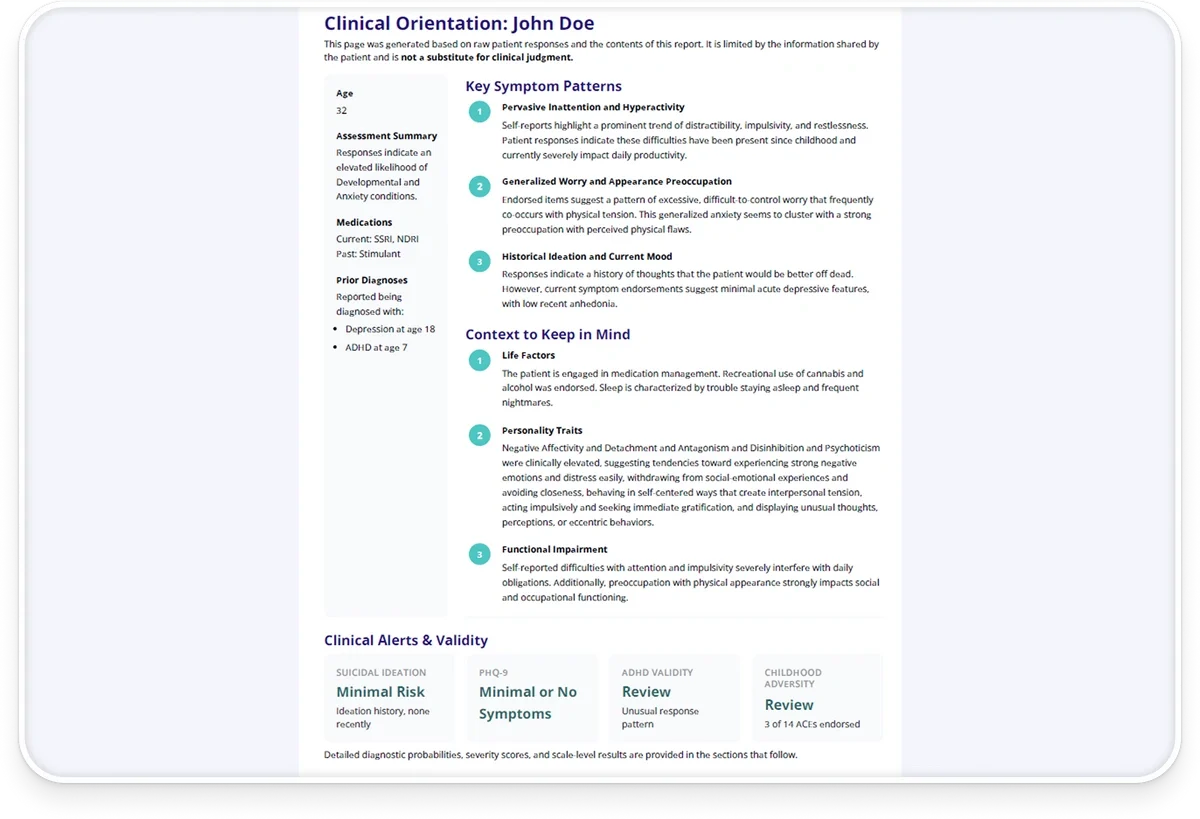
The first section many clinicians review is the Clinical Orientation page. This is a concise, AI-generated summary of the patient’s reported symptoms, background information, and key clinical themes pulled from the full assessment.
Instead of manually piecing together dozens of symptom endorsements before a visit, providers get a clearer starting point for the conversation ahead.
This section is not diagnostic. It is meant to reduce the time spent sorting through information so clinicians can focus more fully on the patient sitting in front of them.
Where the Assessment Adapts
One of the biggest differences between MindMetrix and traditional psychiatric screeners is that the assessment changes based on the patient’s responses.
The report section titled Conditions for Further Evaluation shows where that adaptation occurred.
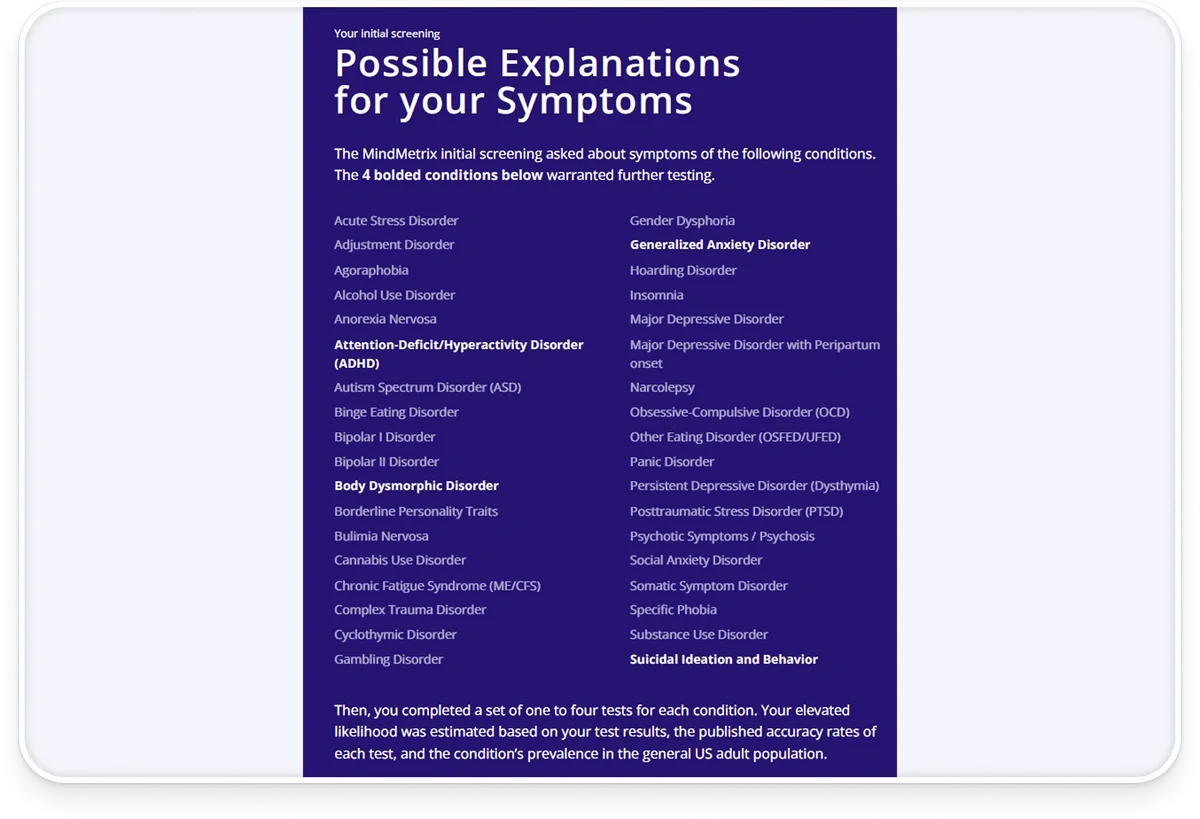
If a patient initially endorses symptoms associated with a particular condition, MindMetrix introduces additional validated rating scales relevant to that presentation.
This allows the assessment to go deeper where clinically appropriate instead of relying on one broad screening questionnaire.
For example, elevated attention concerns may trigger additional ADHD-related measures. Trauma-related responses may introduce PTSD-focused scales. Sleep issues, personality features, mood symptoms, substance use patterns, and functional impairment can all shape the assessment pathway.
The result is a more individualized and clinically useful evaluation process.
Overview of Findings
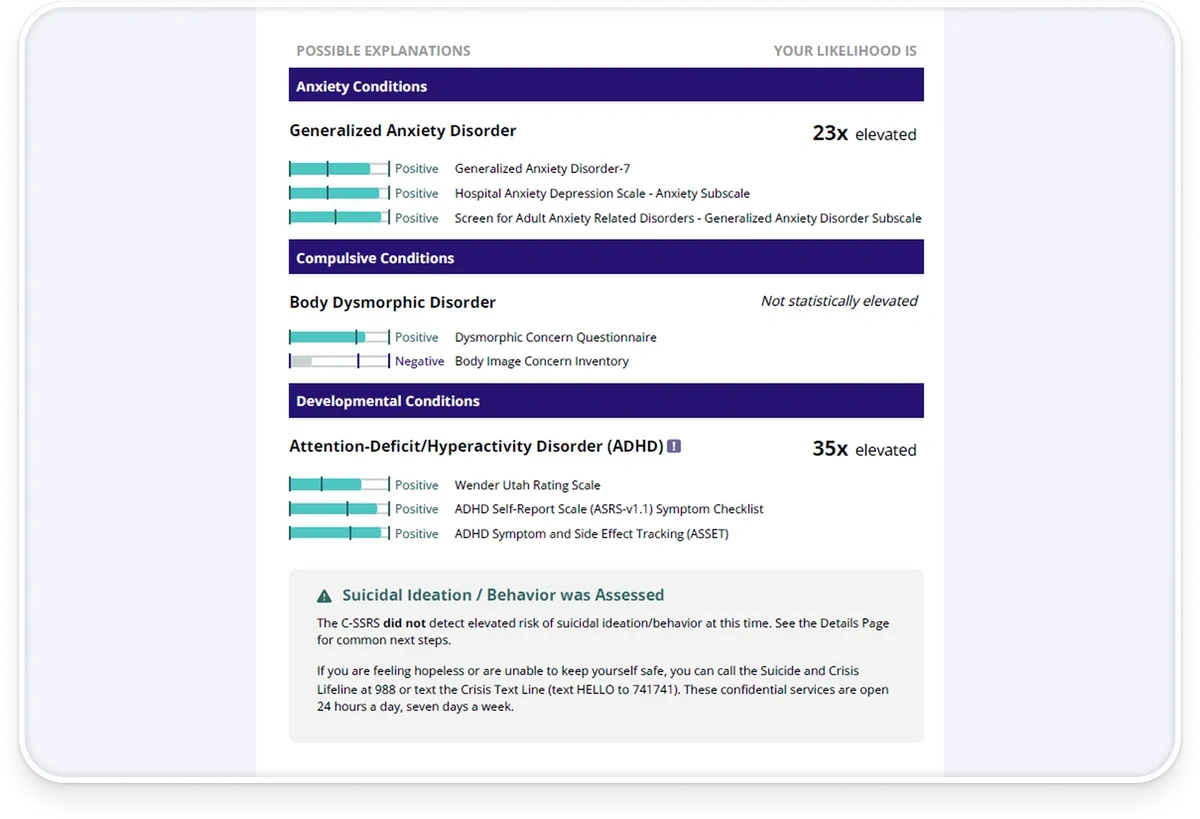
The Overview of Findings section provides a high-level snapshot of the patient’s results.
This includes:
- Probability estimates for relevant conditions
- Likelihood ratios comparing findings to general population expectations
- Score elevations compared against clinical cutoffs
- Key symptom trends across domains
Rather than simply flagging symptoms as positive or negative, the report helps providers understand how strongly the patient’s presentation aligns with patterns seen in validated clinical research.
MindMetrix is designed to support clinical decision-making, not replace it. The assessment highlights patterns of symptoms, functional impact, and contributing factors to help providers build a clearer foundation for evaluation and treatment planning.
While MindMetrix uses validated tools and probability-based modeling, it is not a diagnostic instrument and does not provide treatment recommendations. Only a licensed healthcare professional can diagnose a psychiatric condition or determine medical necessity.
Condition-Level Detail
Many providers spend the most time in the detailed condition sections of the report.
These pages break down:
- Which validated rating scales were administered
- Individual scale results
- Clinical considerations
- Differential diagnosis considerations
- Functional impact and symptom patterns
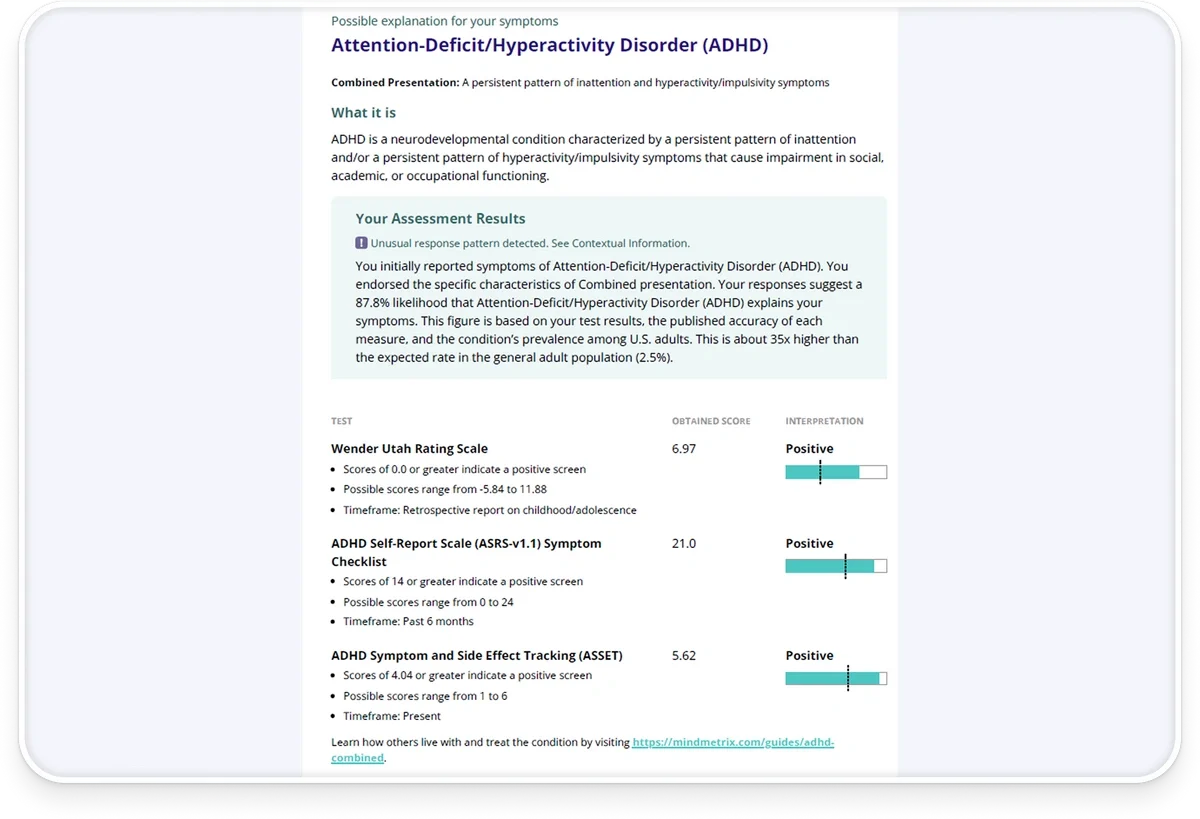
Even when a condition does not show an elevated probability, those details can still be clinically useful.
Sometimes the value of the report is identifying what doesn't fit just as much as what does.
That broader perspective can help uncover comorbidities, reduce diagnostic overshadowing, and support more thoughtful treatment planning.
More than a Single Screener
MindMetrix administers more than 60 peer-reviewed rating scales selected for their sensitivity, specificity, and clinical relevance.
Instead of relying on a single questionnaire per condition, MindMetrix combines complementary measures that evaluate symptoms, history, severity, and functional impact from multiple angles.
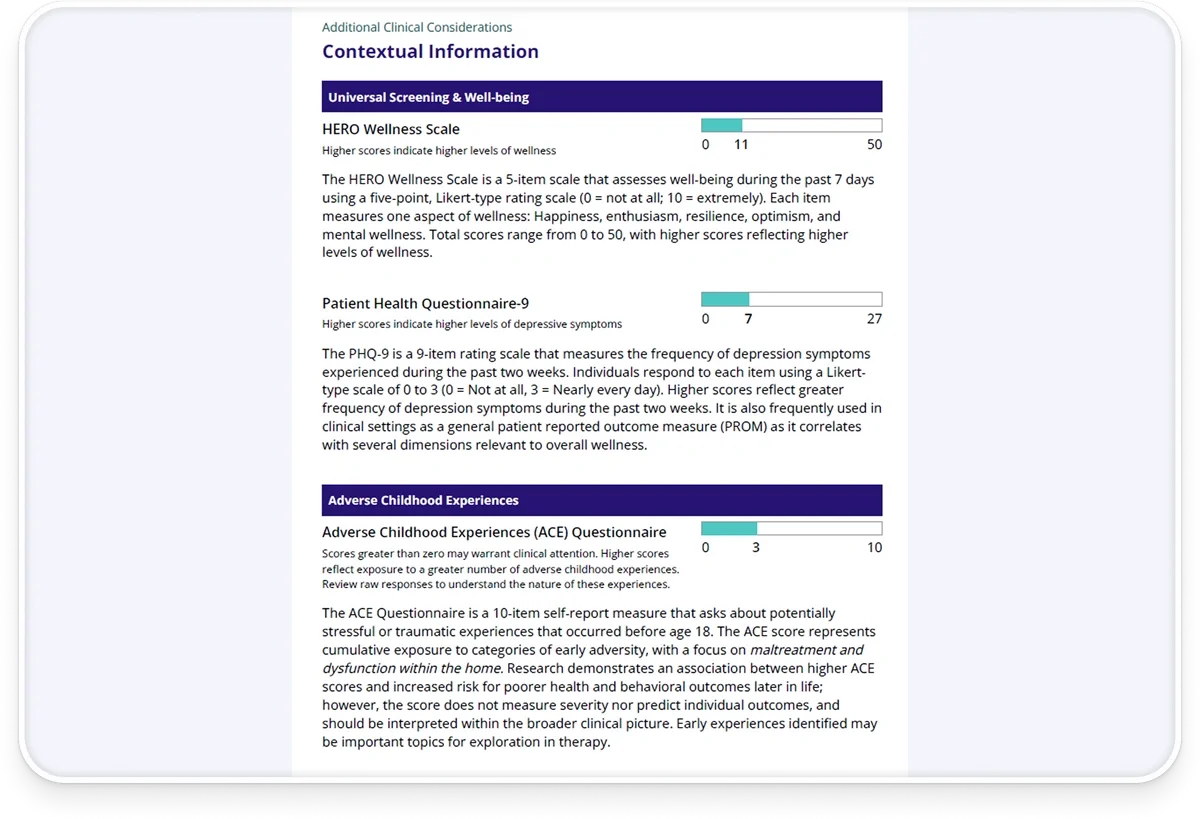
This approach gives clinicians a more complete understanding of how symptoms present across different areas of functioning.
The goal is to help clinicians see the fuller clinical picture.
A Clear and Actionable Report
The report was designed to give clinicians the information they actually need during care without creating more administrative burden.
Key features include:
✔️Results summaries with probability estimates for clinically relevant conditions
✔️Differential diagnosis guidance curated from the full assessment profile
✔️Considerations for diagnosis and treatment planning
✔️Psychosocial and background information that may shape care
✔️Full raw response data for deeper clinical review when needed
What MindMetrix can do is identify areas of potential concern with a high degree of confidence, organize the information patients share, and help guide next steps in the evaluation process.
For many providers, the report becomes less about scoring tests and more about improving clinical organization, intake efficiency, and diagnostic confidence.
Mental health presentations are rarely straightforward. Symptoms overlap. Comorbidities are common. The MindMetrix report was built to help clinicians navigate that complexity with structured, evidence-based data that supports clinical judgment and helps create a clearer path forward for both providers and patients.
Ready to boost your practice?
Try 3 complimentary assessments on us.