5 Best Mental Health Assessment Software in 2026

Better inputs, better diagnoses. Here’s what to look for.
March 20, 2026
Mental health providers face a growing number of patients with mental health concerns. Yet appointments are usually short, and patient histories are often incomplete. This makes it difficult to get accurate insights into a patient’s mental health condition.
Many providers still rely on paper forms and static questionnaires. However, these tools can miss key symptoms and take time to review. They also do not adjust based on patient responses.
Mental health assessment software can address these gaps by using adaptive assessments, automated scoring, and comprehensive reports. It helps you understand patient needs, flag possible conditions, and review test results faster.
In this article, we'll discuss the best mental health assessment software and the key features you need to consider.
These are the best mental health assessment software:
- MindMetrix
- Clinicom
- Creyos
- PsyPack
- PARiConnect
Top 5 Mental Health Assessment Software for Providers
Below, we'll review the best mental health assessment software that providers can use to screen patients.
1. MindMetrix
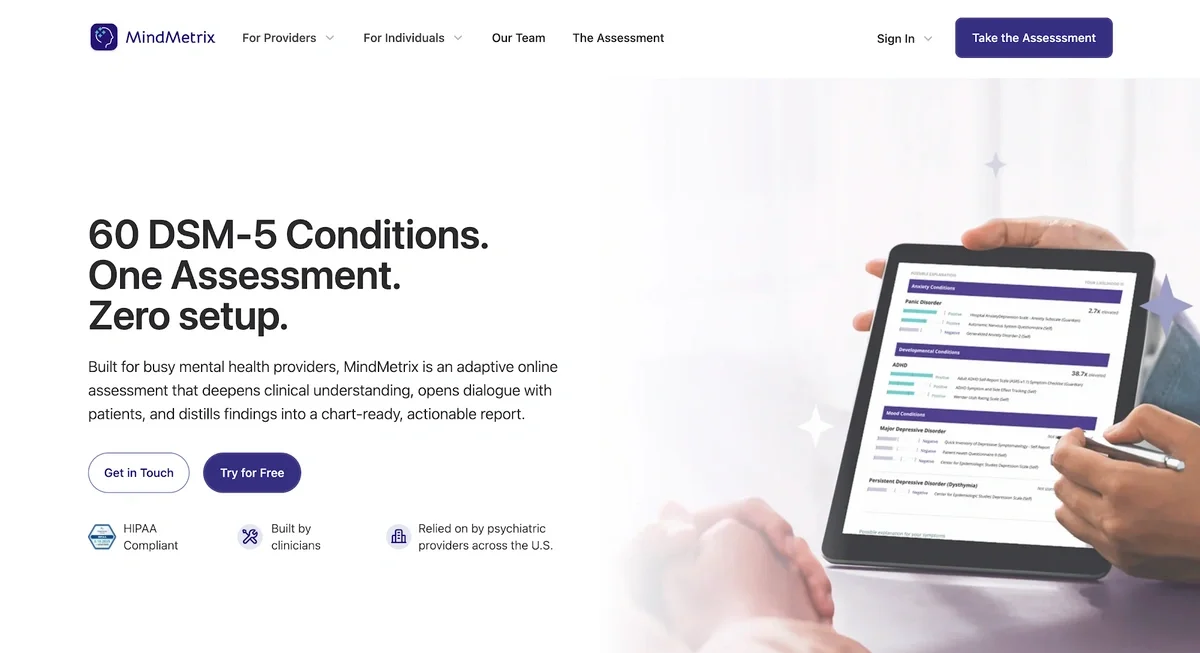
MindMetrix is an adaptive mental health assessment tool designed for busy mental health providers who need deeper clinical insights without extra charting burden.
The software covers more than 90 conditions across both adolescent and adult populations. It goes beyond basic mental health screening by capturing symptom patterns, comorbidities, functional impact, and contributing life factors.
Unlike brief screeners or mental health disorder quizzes, MindMetrix helps you understand the complexities of your patients.
The assessment starts with a general symptom check and adapts as patients respond, directing them through validated rating scales and relevant follow-up questions. It supports and improves your initial evaluation instead of replacing your clinical judgment.
The results are immediately presented in a chart-ready report. This highlights likely conditions, differential diagnosis steps, and other key psychosocial data that shape treatment planning.
MindMetrix is created by a team of psychiatrists, psychologists, counselors, and researchers with decades of experience in mental health care. They understand that you don’t have the time to review lengthy reports or write new notes.
That's why they designed a platform that fits into your existing workflow with no setup required, one-click assessment sending, automated patient reminders, and scheduled follow-up testing.
Sign up to get your free assessments today!
How MindMetrix Works
It's easy to get started with MindMetrix.
First, you invite patients to answer the online assessment through a secure dashboard.
Next, patients take the MindMetrix assessment. They start with the initial symptom screening before moving on to the relevant validated rating scales and context-aware questions related to their responses.
Here's the assessment process that patients go through:
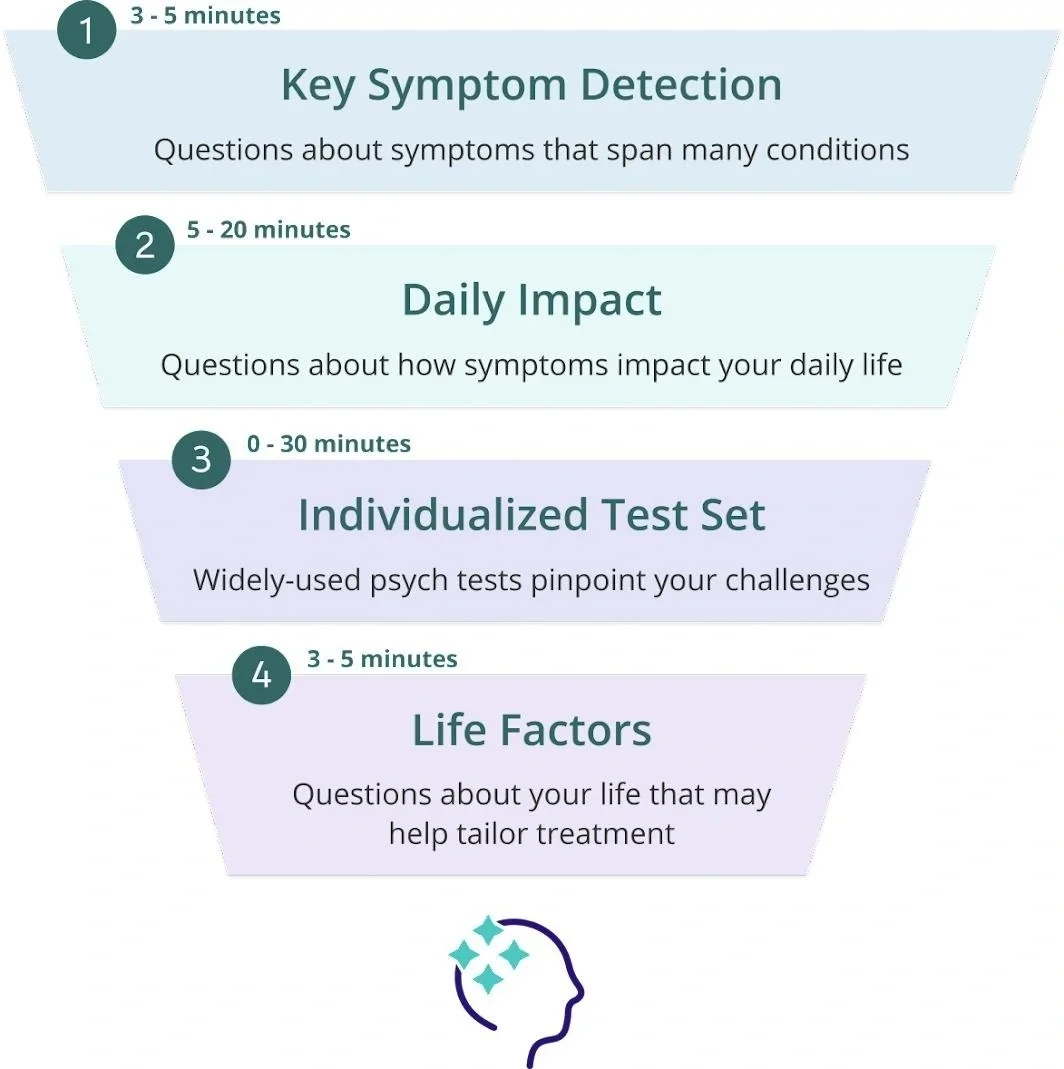
Test-takers can pause, resume, and answer the assessment on their own time using any device. Due to this flexible pacing, the average test completion rate in MindMetrix is 89%.
Once the patient completes the digital assessment, you receive a notification right away. You can review results in a chart-ready report and discuss findings with the patient.
Lastly, you can bill CPT code 96130 in addition to your evaluation and management visit code. This allows you to receive reimbursement for the time spent reviewing test results, interpreting data, and planning mental health treatment.
What Makes MindMetrix Different
MindMetrix stands out from other mental health screening tools by going beyond standardized questionnaires.
Instead of relying on one scale per condition, it uses multiple validated measures together to assess symptoms, history, and functional impact from different angles.
MindMetrix also applies weighted scoring based on test accuracy, so results do not depend on one data point. The platform even checks patterns and looks for consistency across responses, which can reduce self-report biases.
The result? Mental health professionals can see a more complete and nuanced clinical picture. They minimize the risk of misdiagnosis and set each patient on the most effective treatment path.
2. Clinicom
Clinicom is a mental health assessment and reporting platform designed to support intake, triage, and ongoing patient monitoring.
It uses a single adaptive assessment that evaluates various DSM-based conditions, including depression, bipolar disorders, anxiety, and eating disorders, among others.
Then, the platform generates a structured report that outlines patient history, risk flags, severity signals, and other indications for clinician review.
Clinicom also supports scheduled follow-ups. Providers can track changes between visits, monitor patient outcomes over time, and adjust mental health treatment when needed.
3. Creyos
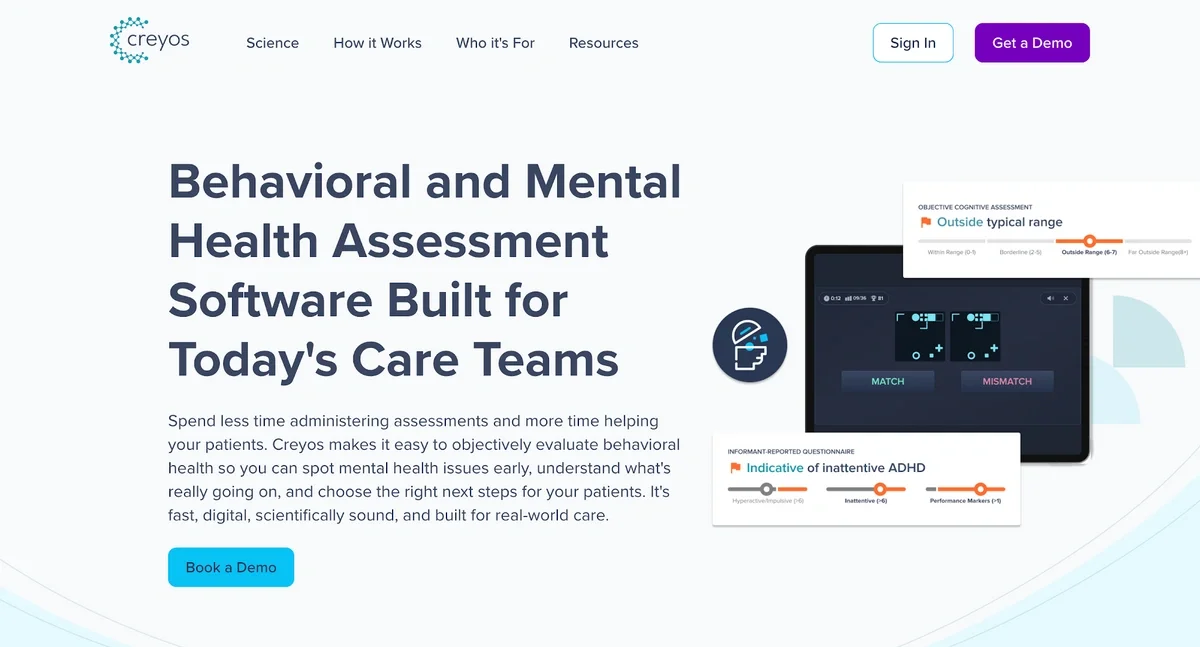
Creyos is a mental health assessment software that combines cognitive testing with validated behavioral health assessments. These help mental health professionals identify mental health issues early, understand how patients are doing, and plan for the right treatment.
The platform can assess behavioral health conditions, such as major depressive disorder, anxiety, attention-deficit/hyperactivity disorder (ADHD), substance use disorders, and other common mental health conditions.
It also measures areas like memory, attention, and reasoning, which are often linked to mental health challenges.
Creyos delivers data-driven reports with scores, norm-referenced cognitive results, and visual summaries of key findings. Clinicians can use these insights to guide patient care and track changes over time.
4. PsyPack
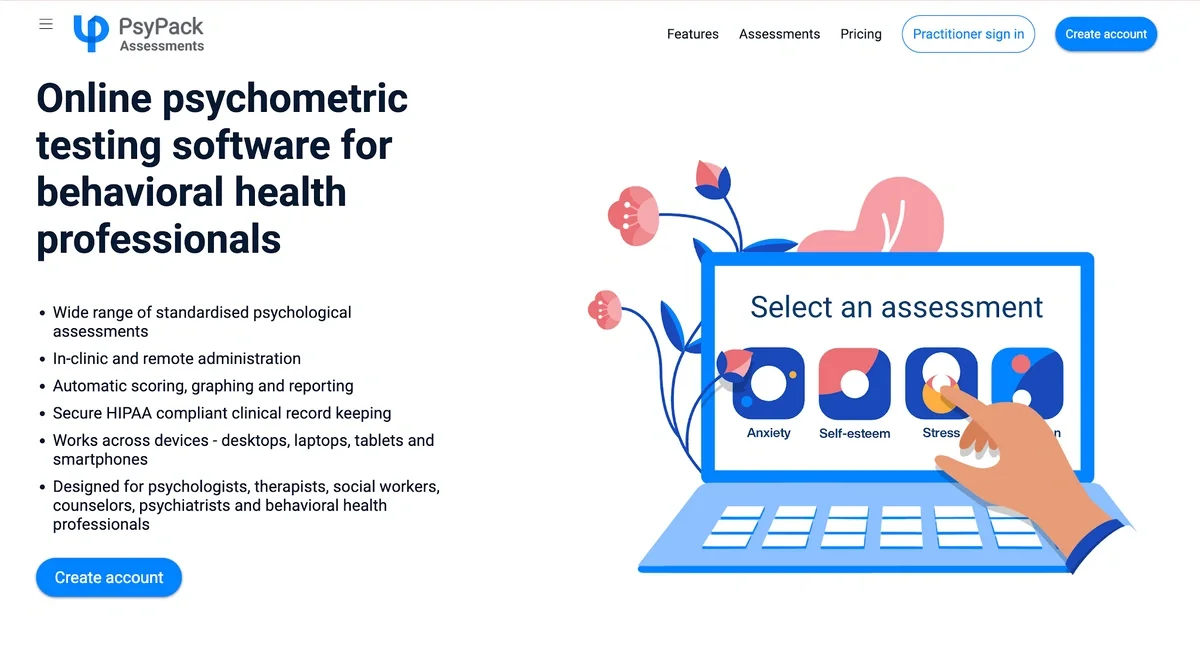
PsyPack's online psychometric testing software provides a comprehensive library of psychological assessment tools.
It helps mental health providers evaluate various conditions, such as depression, generalized anxiety disorder, obsessive-compulsive disorders, autism, and more.
The platform supports both in-clinic and remote assessments, which are easily accessible from any device.
PsyPack also saves time by automatically generating scores, graphs, and reports. Each report comes with test results, recommendations, and tips.
With PsyPack, mental health professionals can even add their notes, clinical analysis, and recommendations. This keeps all insights and documentation in one place for easier review.
5. PARiConnect

CPARiConnect is an online mental health assessment platform that provides access to a large library of standardized psychological tests.
It combines assessment administration, data verification, inventory management, and reporting into one system. This helps clinicians manage the entire mental health evaluation process more efficiently.
The software includes assessments across areas such as personality, trauma, and cognitive function. It can also generate score reports, interpretive reports, and other types of reports, depending on the assessment used.
PARiConnect also integrates with an AI report writer. This reduces administrative burden and allows mental health professionals to focus on their patients.
Why Do Providers Need Mental Health Assessment Tools?
Mental health assessment software provides several advantages to clinicians, making it an important tool for mental health practices. Let's take a closer look below.
Improve Diagnostic Accuracy
Patients do not always report symptoms clearly. Some forget key details, while others may underreport or overstate what they feel. This creates gaps in your assessment.
Mental health assessment software can reduce self-report biases by using standardized tests and validated scales. It can identify patterns in symptoms, history, cognitive impairment, and severity measures.
To ensure accurate and weighted scoring, the platform interprets test results using the published precision of the instrument.
As a result, you receive a more comprehensive picture of the patient’s condition. You can achieve an accurate diagnosis, which leads to better outcomes and higher success rates.
Enhance Clinical Decision-Making
Clinical decisions depend on the quality of your data. When information is incomplete, treatment planning becomes harder.
Mental health assessment software provides comprehensive reports with clear findings to save time during review. You can quickly see symptom severity, possible mental health conditions, and other key details.
It also helps you compare different areas of concern in one place. You do not have to piece together information from multiple sources.
With better insights, you can instill confidence in your patients by fully understanding their symptoms before initiating treatment.
Reduce Administrative Workload
Scoring tests, reviewing assessment results, and writing notes can take up valuable time between sessions.
Research shows that psychiatrists and other mental health professionals spend 20.3% of their total working hours on administrative tasks. This highlights the significant amount of time lost to non-clinical work.
Mental health assessment software helps you get time back in the clinic by handling admin tasks faster.
The platform automatically scores completed assessments and translates results into ready-to-review reports.
Everything is also stored in one place, so you can quickly administer assessments, view reports, and access patient data without searching through different systems. This simplifies daily workflows and saves valuable time.
MindMetrix uses a single adaptive assessment tool that screens for over 90 conditions in one centralized workflow. It reduces the need to choose individual rating scales and switch between multiple portals. Book a demo today!
Track Patient Progress
Mental health care does not stop after the first visit. You need to see how patients respond over time.
Mental health assessment tools can track changes in symptoms, treatment response, and functioning between sessions. It stores past results and compares them with new data.
You can quickly see if a patient is improving, staying the same, or getting worse. You can adjust treatment when needed.
The software also gives patients a clear view of their progress. This can improve engagement and follow-through.
Enable Early Detection and Prevention
Many cases of mental illnesses and conditions develop over time. Early signs are often subtle and easy to miss during short visits.
Mental health assessment software helps you identify symptoms earlier through comprehensive screening. It checks for multiple conditions in one process, making it easier to catch mental health issues before they become severe.
Early detection allows you to act sooner. You can start treatment plans right away and reduce the long-term impact on the patient.
It also plays a role in suicide prevention by flagging risk factors and warning signs that may not come up in conversation.
With deeper insights into patients' symptoms, you can take proactive steps and improve patient outcomes.
Key Features to Look for in Mental Health Assessment Software
When evaluating different mental health assessment platforms, you should consider the following features:
- Validated scales: Check if the software uses clinically validated scales with proven reliability. These research instruments support accurate symptom measurement and ensure results align with established standards.
- Adaptive assessment: Invest in a platform that screens symptoms broadly and goes deeper when needed. It should adapt questions and rating scales to capture the full clinical picture.
- Automated scoring: Assessment results should be processed instantly and presented clearly. Automated scoring reduces errors and allows faster review during or before patient visits.
- Detailed reports: Make sure the software highlights symptom severity, patterns, and possible conditions in a chart-ready report.
- HIPAA-compliant dashboard: The platform should protect patient data with secure access controls and encryption. A centralized dashboard lets you view assessments, reports, and patient records in one place.
- Built-in scheduling tools: These can automatically send assessments before visits and remind patients to complete them. This improves completion rates and ensures you have data ready before the session.
Get a Comprehensive and Adaptive Mental Health Assessment With MindMetrix
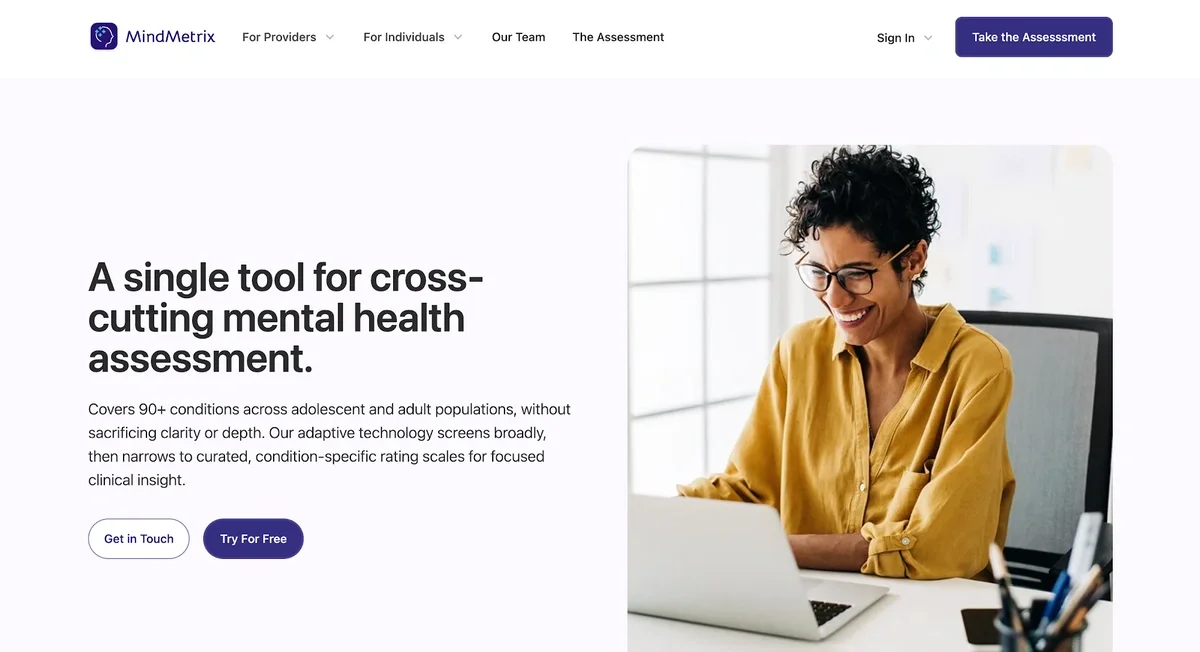
MindMetrix provides clearer clinical insights into your patients without adding more work to your day. It uses a single, adaptive assessment that screens symptoms broadly and narrows down to validated rating scales and targeted context questions.
This gives you a level of structure, breadth, and psychometric rigor that is difficult to achieve in a standard visit. The result? More accurate diagnoses and less second-guessing.
MindMetrix's assessment covers more than 90 conditions and captures symptom patterns, comorbidities, functional impact, and relevant life contributing factors.
Results are delivered in a chart-ready report that supports faster review and more confident clinical decisions.
With no setup required, one-click assessment sending, and scheduled follow-up testing, MindMetrix fits into your existing workflow. You spend less time on admin tasks and more time focused on patient care.
Sign up to get your free assessments today! Or book a personalized demo to learn how our software strengthens clinical evaluations.
FAQs About Mental Health Assessment Software
What is mental health assessment software?
Mental health assessment software is a digital tool used to screen, assess, and monitor patient symptoms. It features standardized questionnaires, validated rating scales, automated scoring, and detailed reports.
Mental health providers and primary care physicians use this software to support diagnosis, treatment planning, and ongoing mental health care.
What is the best mental health assessment software?
The best mental health assessment software depends on your clinical needs. Look for tools with adaptive screening, validated scales, and comprehensive reports. Platforms like MindMetrix stand out for offering a single adaptive assessment, condition-specific rating scales, validated measures, and chart-ready reports designed for busy mental health providers.
How much does mental health assessment software cost?
The cost of mental health assessment software varies based on features, number of users, and assessment volume. Some platforms charge monthly/yearly subscription fees, while others use patient-pay pricing. MindMetrix supports both payment models to meet the unique needs of your mental health practice.
Ready to boost your practice?
Try 3 complimentary assessments on us.